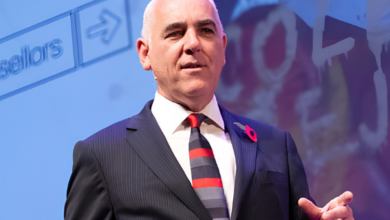
Polly Mackenzie: Innovation Leader, Policy Expert and Public Purpose Pioneer
From government policy and social research to venture building, Polly Mackenzie has developed a career focused on turning ideas, research and public-purpose thinking into practical solutions.


Polly Mackenzie is a British innovation leader, policy expert, writer and former government adviser. She is currently Co-Founder and CEO of Zinc Innovation Partners, where she leads venture-building and investment partnerships designed to help scientists and innovators turn research into scalable businesses. She is also a member of the Research England Council and has previously led Demos, founded the Money and Mental Health Policy Institute, and served as Director of Policy to the Deputy Prime Minister from 2010 to 2015.
Who Is Polly Mackenzie?
Polly Mackenzie has built a career at the intersection of public policy, social impact, research, innovation and entrepreneurship. Rather than remaining within one professional field, she has moved between journalism, government, think tanks, higher education and venture building.
Today, Mackenzie is best known for her role as Co-Founder and CEO of Zinc Innovation Partners. According to Zinc, she leads investment and venture-building partnerships intended to help researchers and innovators turn breakthrough research into scalable businesses with practical impact.
Her career also includes senior roles in British public policy. Between 2010 and 2015, she served as Director of Policy to then Deputy Prime Minister Nick Clegg, advising the coalition government on domestic policy.
Polly Mackenzie’s Early Career
Mackenzie’s professional journey began in journalism. According to Demos, she started her career as a business journalist, before moving into public policy in 2004.
She subsequently worked as a policy adviser on housing and local government for Edward Davey and later worked with Nick Clegg. Her government career became particularly prominent after the 2010 general election, when she became Director of Policy to the Deputy Prime Minister.
This period gave Mackenzie experience in policy development and the workings of government at the highest level. Demos also records her involvement in helping to write the 2010 Coalition Agreement, illustrating the breadth of her policy responsibilities during that period.
Polly Mackenzie and Government Policy
Mackenzie’s five years as Director of Policy were an important stage in her career.
Working in the coalition government meant dealing with complex domestic-policy questions while balancing competing priorities. Her experience later informed her work in civil society and public-policy research.
After leaving government in 2015, Mackenzie continued working on social and political issues. She was involved in establishing the operations of the Women’s Equality Party and subsequently founded the Money and Mental Health Policy Institute.
The latter reflected another characteristic of her career: identifying problems that sit across different areas and attempting to develop practical policy responses.
Founding the Money and Mental Health Policy Institute
Mackenzie founded the Money and Mental Health Policy Institute, an organisation focused on the relationship between financial difficulties and mental health problems.
The institute represented a shift from traditional government policy towards research-led social impact. Its work examined how financial services, public policy and people’s experiences could interact, particularly for individuals experiencing mental-health difficulties.
This experience is relevant to Mackenzie’s later innovation work because it demonstrates her long-standing interest in connecting evidence, institutions and practical solutions.
Polly Mackenzie at Demos
From 2018 to 2022, Mackenzie served as Chief Executive of the independent think tank Demos.
During her time at Demos, she worked on subjects including democracy, public services, social cohesion and policy reform. One notable body of work was the Making Democracy Work series, which explored how democratic institutions and public policy could respond to changing social conditions.
Her published work during this period included The Humble Policy Maker and The Gravitational State. The latter examined how government and policy-making might help strengthen relationships between citizens and society.
Her Demos years therefore added research, public debate and institutional reform to an already varied career.
Polly Mackenzie and Higher Education
Between 2022 and 2025, Mackenzie served as Chief Social Purpose Officer at the University of the Arts London.
UKRI says she led work covering environmental and social governance, civic engagement, communications and development.
The role was significant because it brought together several strands of her professional experience. Her background in policy, social impact and organisational strategy could be applied within a major higher-education institution.
It also provided a bridge towards her current focus on research commercialisation and innovation.
Polly Mackenzie and Zinc Innovation Partners
Mackenzie’s current professional focus is Zinc Innovation Partners.
Zinc describes her as Co-Founder and CEO, with responsibility for investment and venture-building partnerships that help scientists and innovators turn research into scalable and impactful businesses.
The approach involves connecting research with entrepreneurship. Instead of treating academic research as an end point, the objective is to help develop teams, ventures and practical applications that can address significant real-world challenges.
This role closely matches Mackenzie’s own description of herself as an innovation leader working with universities, philanthropists, government and business to build solutions.
Her current work therefore brings together many of the themes that have appeared throughout her career: evidence, public purpose, institutional collaboration, entrepreneurship and practical problem-solving.
Polly Mackenzie and Research England
Mackenzie is also a member of the Research England Council. UKRI’s current profile lists this as one of her major responsibilities.
Research England forms part of UK Research and Innovation and has responsibilities connected with England’s research and knowledge-exchange system.
Her involvement is particularly relevant to her current work because research commercialisation is central to her role at Zinc Innovation Partners.
A recent UKRI publication also identifies Mackenzie as CEO of Zinc Innovation Partners and a Research England Council member, highlighting her involvement in discussions around the commercialisation of arts and humanities research.
Polly Mackenzie Age
Polly Mackenzie’s age is 45 as of September 2026, based on publicly listed information giving her date of birth as 8 December 1980. She will turn 46 in December 2026.
Her age places her career across several major stages of British public life, from journalism in the early 2000s to government policy, think-tank leadership, higher education and innovation.
Polly Mackenzie Family
Publicly available biographical information says that Polly Mackenzie is married to journalist and novelist Nick Tyrone and that they have three children. Demos has also stated that she lives in South East London and has three children.
Mackenzie generally has a stronger public profile for her professional work than for her family life, so detailed information about her children is not widely documented in authoritative professional sources.
Polly Mackenzie Net Worth
There is no reliable, publicly verified figure for Polly Mackenzie’s personal net worth.
Her career includes senior positions in government, think tanks, higher education and innovation, but job titles alone do not provide enough evidence to calculate personal wealth. Her current role at Zinc Innovation Partners also does not establish a publicly disclosed personal fortune.
Therefore, online claims giving a precise Polly Mackenzie net worth should be treated cautiously unless supported by credible financial documentation.
Polly Mackenzie Wikipedia
A Polly Mackenzie Wikipedia page exists and provides a biographical overview of her career, including her work as a journalist, government policy adviser, Demos chief executive and Chief Social Purpose Officer at the University of the Arts London.
However, Wikipedia should be viewed as a starting point rather than the sole authority for current professional information. For up-to-date details, official sources such as UKRI and Zinc provide more direct confirmation of Mackenzie’s present roles.
What Makes Polly Mackenzie’s Career Notable?
The defining feature of Mackenzie’s career is its breadth.
She has worked inside government, led a major think tank, founded a policy institute, held a senior social-purpose position in higher education and moved into venture building. These experiences have given her exposure to different ways of solving complex problems.
Her current work reflects that combination. Innovation is not simply about creating new technology; it can also involve developing better organisations, connecting research with investment and finding new ways to address social and economic challenges.
That perspective helps explain why her professional description places emphasis on collaboration between universities, philanthropists, government and business.
Conclusion
Polly Mackenzie’s career spans journalism, government policy, social research, higher education and innovation. Her work as a former government policy director and Demos chief executive established her credentials in public policy, while founding the Money and Mental Health Policy Institute demonstrated a commitment to research-led social change.
Today, as Co-Founder and CEO of Zinc Innovation Partners and a Research England Council member, she is focused increasingly on turning research and ideas into practical ventures and solutions.
For readers searching for Polly Mackenzie age, family, net worth or Wikipedia information, the available evidence shows a well-documented professional career but limited verified financial and private-life details. The clearest picture comes from her current institutional roles and the organisations with which she has worked.
Overall, Polly Mackenzie’s professional story is one of moving ideas between sectors — from journalism and government to research, social purpose and venture building — with innovation and practical impact increasingly at its centre.