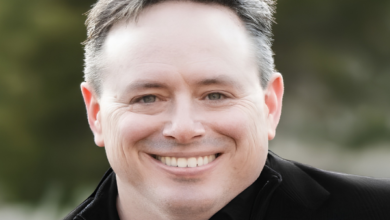
Teresa Niccoli: Career, Research, Age, Family and Net Worth
Discover the career of UCL scientist Teresa Niccoli, her dementia research, academic background, family life, and what is publicly known about her personal profile.


Teresa Niccoli is a British-based scientist and Associate Professor at University College London’s Institute of Healthy Ageing. She is an Alzheimer’s Research UK Senior Research Fellow whose research focuses on the molecular mechanisms behind dementia and neurodegeneration. Her laboratory uses fruit-fly models to investigate why some neurons become vulnerable to disease while others remain resilient. She studied Natural Sciences at the University of Cambridge, completed a PhD in Cell Biology at UCL and later returned to academic research after a five-year career break to care for her two sons.
Who Is Teresa Niccoli?
Teresa Niccoli is a scientist specialising in ageing, dementia and neurodegenerative disease. She is currently an Associate Professor at the Institute of Healthy Ageing at University College London (UCL). UCL lists her among the academics working within the Institute, with her research area identified as neurodegeneration in dementia.
Her scientific career has developed across several areas of cell biology. Before concentrating on dementia, she worked on cell polarity and microtubule dynamics in yeast and fruit flies. These earlier interests eventually provided a foundation for her research into neurological disease.
Niccoli joined UCL’s Institute of Healthy Ageing as a Senior Alzheimer’s Research UK Fellow in 2019. Her work now centres on understanding the biological processes that cause nerve cells to become damaged or die during neurodegenerative disease.
Teresa Niccoli’s Academic Background
Niccoli has a strong academic background in biological sciences.
She completed a BA in Natural Sciences at the University of Cambridge in 1997. She subsequently studied for a PhD in Cell Biology at University College London, completing the doctorate in 2002. In 2009, she also completed a Master’s degree in Medical Ethics and Law at King’s College London.
Her doctoral research was conducted with Nobel Prize-winning scientist Paul Nurse at Cancer Research UK. The work examined cell polarity and microtubule dynamics in Schizosaccharomyces pombe, commonly known as fission yeast.
After completing her PhD, Niccoli continued her research at Cambridge’s Gurdon Institute with Daniel St Johnston. There, she investigated cell polarity using Drosophila, or fruit flies. This model organism later became central to her dementia research.
Teresa Niccoli and Dementia Research
One of the defining features of Teresa Niccoli’s work is her use of fruit flies to investigate neurodegenerative diseases.
The Niccoli Lab explains that its research aims to understand the molecular mechanisms that lead to neuronal cell death in dementia. Fruit flies are particularly useful because researchers can follow disease processes across their relatively short lifespans while studying defined genetic and cellular mechanisms.
Her research includes Alzheimer’s disease, frontotemporal dementia (FTD) and amyotrophic lateral sclerosis (ALS). One important area involves the C9orf72 gene, a major genetic cause associated with FTD and ALS.
A key question for Niccoli’s research is why certain populations of neurons are damaged by disease while others appear more resistant. Understanding this selective vulnerability could help researchers identify protective biological pathways and potential therapeutic targets.
In 2025, UCL reported research led by Niccoli that investigated why some nerve cells in fruit-fly models were more resistant to disease processes associated with FTD and ALS. The study explored cellular responses that may help explain differences in neuronal vulnerability.
Teresa Niccoli’s Career Journey
Niccoli’s professional journey has not followed a completely conventional academic path.
After her early research career, she took a five-year career break to look after her two sons. She has spoken publicly through UCL about the experience and the challenges and benefits of returning to scientific work after time away from research.
In 2010, she resumed her scientific career by joining Linda Partridge’s laboratory at UCL. She began working on Drosophila models of neurodegeneration and later continued related research in Adrian Isaacs’ laboratory at the Dementia Research Institute at UCL.
This return eventually led to her establishing an independent research programme. Her current work combines genetics, ageing biology, cell biology and neuroscience.
Teresa Niccoli Age
How old is Teresa Niccoli?
Teresa Niccoli’s exact date of birth and current age are not publicly confirmed by authoritative sources.
Her official UCL and laboratory biographies provide detailed information about her education and career but do not state her date of birth.
For that reason, it would be misleading to publish a specific age based on online estimates or assumptions. Her academic timeline does establish that she completed her Cambridge degree in 1997 and her PhD at UCL in 2002, but these dates should not be used to calculate an exact age.
Teresa Niccoli Family
Does Teresa Niccoli have children?
Niccoli has publicly discussed having two sons. Her official laboratory biography states that she took a five-year career break to look after them before returning to scientific research in 2010.
She has therefore spoken about family life mainly in the context of balancing childcare with an academic career. Her experience demonstrates that a career interruption does not necessarily prevent a researcher from returning to laboratory science and developing an independent research programme.
Beyond the information she has chosen to make public, detailed information about her wider family is limited. There is no need to speculate about relatives or private family circumstances that have not been reliably documented.
Teresa Niccoli Net Worth
What is Teresa Niccoli’s net worth?
Teresa Niccoli’s net worth has not been publicly disclosed or independently verified.
As an academic researcher, her publicly documented professional information focuses on her university position, research funding, scientific publications and academic achievements rather than personal finances. Neither UCL’s public profile nor the Niccoli Lab biography provides a verified figure for her personal wealth.
Consequently, online claims giving a specific net worth should be treated cautiously unless supported by reliable financial documentation.
Teresa Niccoli Wikipedia
Is Teresa Niccoli on Wikipedia?
There does not currently appear to be a dedicated English-language Wikipedia biography for Teresa Niccoli. Wikidata identifies her as a researcher associated with University College London, but its record shows no Wikipedia sitelink for her.
The absence of a Wikipedia page does not reflect the significance of her research. Her professional record can instead be verified through UCL, her laboratory’s website and her published academic research.
Teresa Niccoli’s Research and Publications
Niccoli has contributed to research published in scientific journals covering dementia, ageing, cellular metabolism and neurodegeneration.
Her publication record includes research into C9orf72-associated ALS and FTD, glucose metabolism, mitochondrial dysfunction and Alzheimer’s disease models. Her laboratory’s publication list also records a 2024 review examining the use of Drosophila amyloid toxicity models to study Alzheimer’s disease.
Her research is particularly notable for connecting fundamental cell biology with questions that matter to human neurological disease. Instead of looking only at symptoms, her work investigates the cellular mechanisms that cause neurons to become vulnerable.
Why Teresa Niccoli’s Work Matters
Dementia is a complex group of diseases involving progressive changes in the brain. Researchers still face major questions about why particular neurons are affected while neighbouring cells can remain comparatively resistant.
Niccoli’s research addresses this problem at a molecular level. Her use of fruit-fly models allows scientists to investigate disease mechanisms, genetic factors and potential protective pathways under controlled experimental conditions.
The Institute of Healthy Ageing at UCL takes a broader approach to understanding ageing and age-related disease, using model organisms to investigate biological processes that may be conserved across species. Niccoli’s dementia research fits directly within this wider scientific mission.
Conclusion
Teresa Niccoli has built a distinctive scientific career around ageing, dementia and neurodegeneration. From her early work on cell biology and developmental mechanisms to her current research at UCL, her career demonstrates how fundamental biological research can evolve into investigations with direct relevance to human disease.
She is now an Associate Professor at UCL’s Institute of Healthy Ageing and an Alzheimer’s Research UK Senior Research Fellow. Her laboratory uses fruit-fly models to investigate Alzheimer’s disease, frontotemporal dementia and ALS, with particular interest in why some neurons are vulnerable while others resist disease-related damage.
Although her exact age and net worth are not publicly verified, her academic qualifications, research history and scientific publications provide a well-documented picture of her professional achievements. Her five-year career break to care for her two sons is also an important part of her publicly described career journey.
Overall, Teresa Niccoli’s work sits at the intersection of cell biology, ageing research and neuroscience, contributing to the wider effort to understand the biological causes of dementia and identify new avenues for future treatments.